
WATI ASTRA OpenAPI (latest)
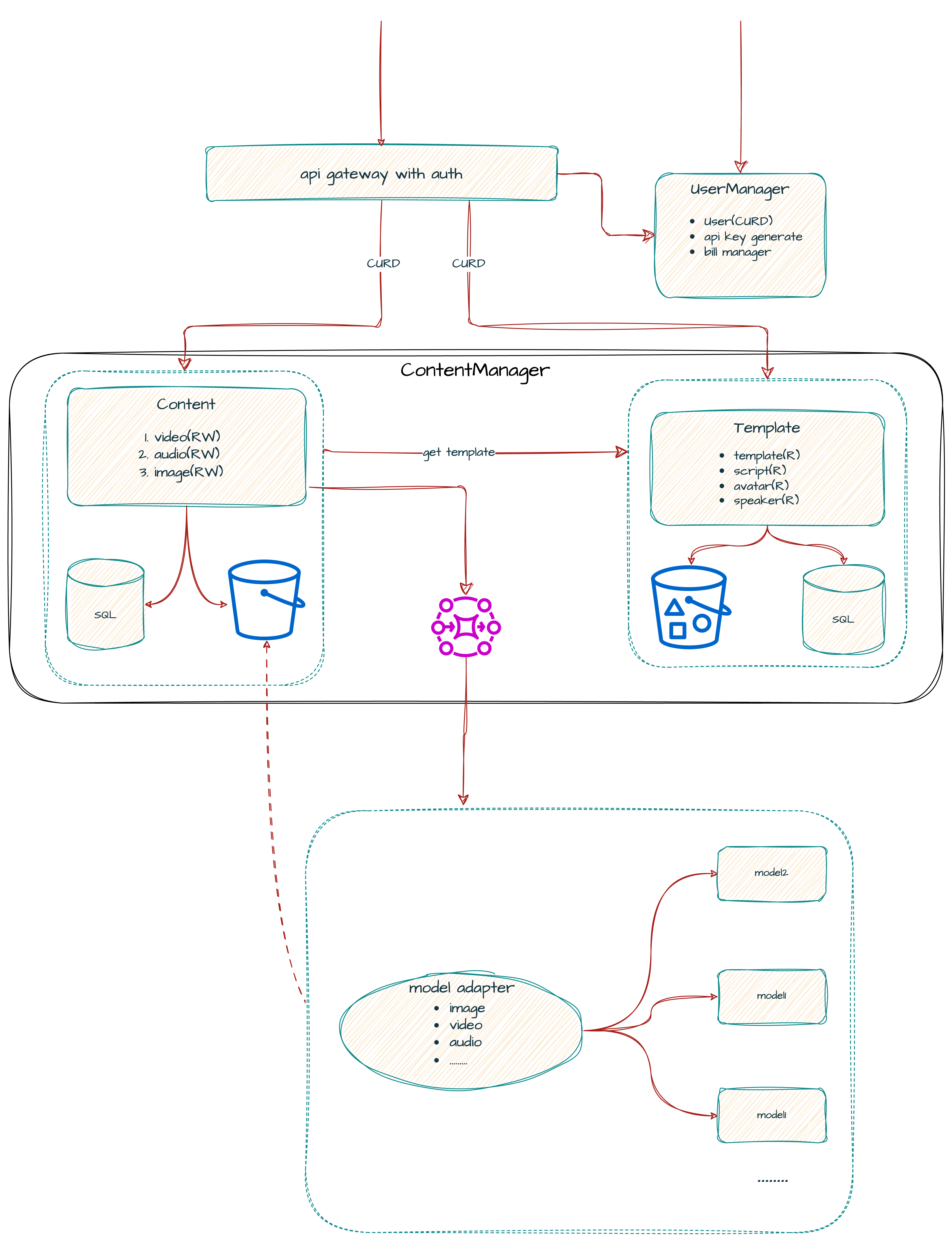
An external proxy service responsible for authenticating interfaces and forwarding requests to the appropriate services. Language: GOLANG
A user management service responsible for managing users, handling user login authentication, and managing user credit functionalities. Language: GOLANG
A content management service tasked with managing both public and user resources, including generating/deleting videos, retrieving portrait lists, and more. Language: GOLANG
Responsible for invoking various models to generate videos or audio. It does not expose an API; instead, it receives requests via PUBSUB. Language: PYTHON
Responsible for collecting metrics and uploading them to BigQuery. It does not has a HTTP interface, only GRPC. Language: GOLANG
- For string subtypes:
- string(int64) for request fields: Accepts either a number or a numeric string. If the number is too large (above 2^31) and is subject to JSON Number precision limitations, it is recommended to use a string representation.
- string(int64) for response fields: Provided as a string representing a decimal number, e.g., "1000000".
- string(byte) for both request/response fields: Pass Base64-encoded binary data, e.g., "YWJjMTIzIT8kKiYoKSctPUB+".
- string(date-time) for both request/response fields: Pass a date string in RFC 3339 format, e.g., "2017-01-01T10:00:20.021Z".
- Default values when request fields are missing:
- For string: Defaults to an empty string "".
- For int32/int64/float: Defaults to 0.
- For bool: Defaults to false.
- For object: Defaults to null.
- For array: Defaults to an empty array.
- Missing fields in responses should follow the above rules.
- When an error occurs during service processing, the service returns a standardized JSON format as shown below:
{"code": 1, "message": "verbose error message"} - In the event of an error, the returned HTTP error code and the meaning of the
codefield are as follows:
| Code | Abbreviation | HTTP Status Code | Explanation |
|---|---|---|---|
| 0 | OK | 200 | Success |
| 3 | INVALID_ARGUMENT | 400 | Invalid parameter |
| 5 | NOT_FOUND | 404 | Resource not found |
| 6 | ALREADY_EXISTS | 409 | Resource already exists |
| 7 | PERMISSION_DENIED | 403 | Unauthorized access |
| 8 | RESOURCE_EXHAUSTED | 429 | Too many simultaneous calls by the user |
| 9 | FAILED_PRECONDITION | 402 | Insufficient user balance |
| 12 | UNIMPLEMENTED | 501 | Not implemented |
| 13 | INTERNAL | 500 | Internal server error |
| 16 | UNAUTHENTICATED | 401 | User not authenticated/authorization failed |
Authentication is divided into API_KEY and TOKEN.
When accessing resources, the user should include the TOKEN/API_KEY in the HTTP Authorization header in the following format:
Authorization: Bearer [TOKEN/API_KEY]